
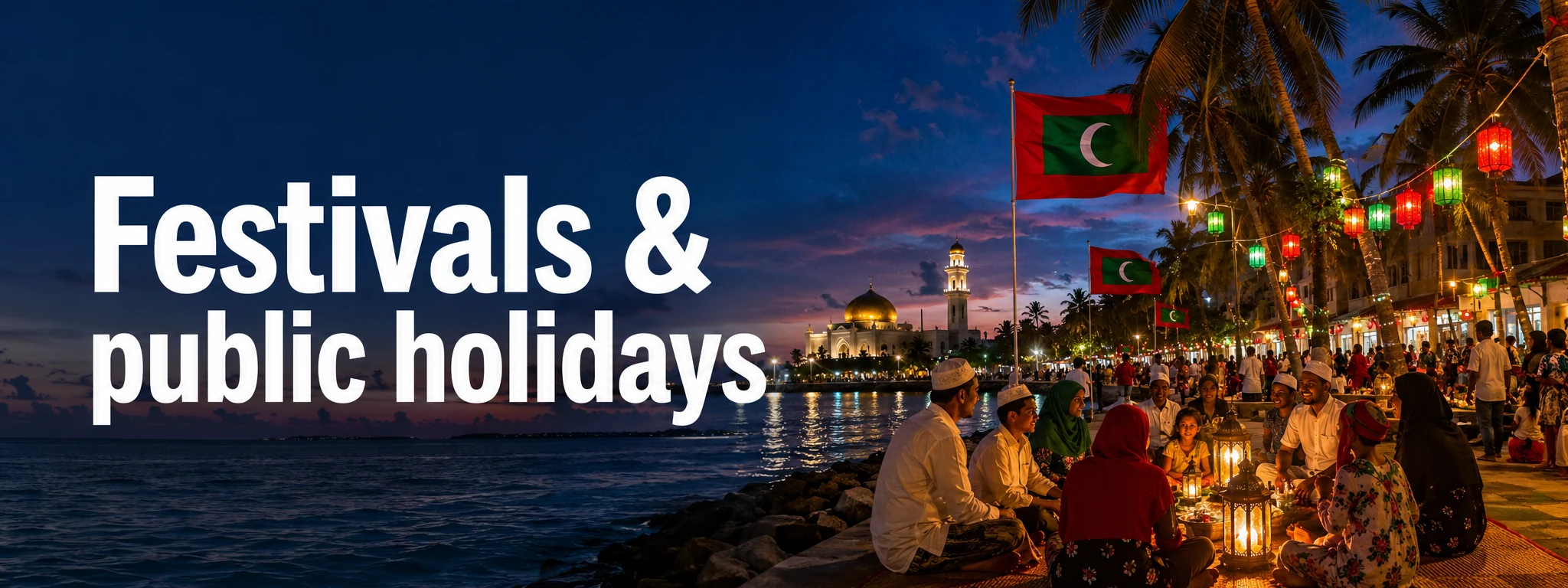
The Maldives' calendar of festivals and public holidays runs mostly on the Islamic lunar calendar, which means dates shift by about 10–11 days earlier each year on the standard (Gregorian) calendar — worth checking against your specific travel dates rather than assuming a fixed date each year.
Ramadan
The most visible period for visitors is Ramadan, the month of daytime fasting observed across the country. Resorts generally continue operating as normal for guests — meals, bars and pools run unaffected — but on local islands, cafés and shops may keep shorter daytime hours and pick back up after sunset, when the fast breaks. It's a good period to be a considerate visitor if you're spending any time off-resort; see our religion & etiquette guide.
Eid celebrations
Eid al-Fitr (marking the end of Ramadan) and Eid al-Adha are both major, festive public holidays, observed with communal prayers and gatherings — local islands in particular have a noticeably livelier, celebratory atmosphere around these dates.
Independence Day
26 July marks Maldivian independence from British protectorate status in 1965 (see our history timeline), observed as a national holiday with flag displays and events, particularly visible in Malé.