
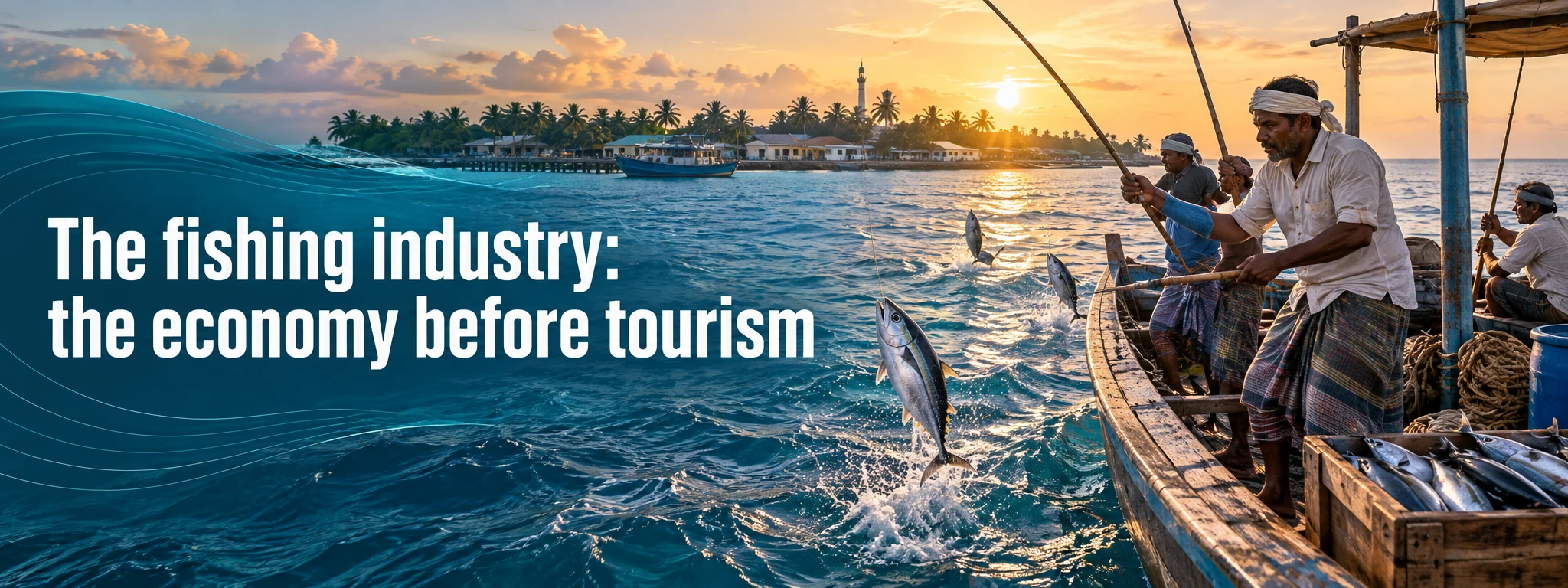
Long before resort tourism existed, the Maldivian economy was built almost entirely on one industry: tuna fishing. It's easy to lose sight of that behind the resort-and-reef image most visitors encounter, but fishing remains a genuine second pillar of the economy alongside tourism, not a relic replaced by it.
Pole-and-line fishing
Traditional Maldivian tuna fishing uses a pole-and-line method — see our traditional fishing guide — catching skipjack and yellowfin tuna one fish at a time rather than with nets. This method has a real environmental reputation attached to it: significantly lower bycatch than industrial net fishing, which has become a genuine point of national identity and, increasingly, an export marketing advantage in a world more attentive to sustainable seafood sourcing.
Why tuna shows up everywhere in the food
This economic history explains something that might otherwise seem like an odd coincidence: tuna's near-total dominance of traditional Maldivian cuisine (see our Maldivian cuisine guide) isn't a stylistic choice — it's simply what the country has always had in abundance.
Two pillars, not one
Tourism now dominates the country's revenue and international profile, but fishing communities on local islands (see our local island life guide) still depend heavily on the industry that predates the first resort by centuries — worth remembering behind the overwater villa image most visitors come away with.