
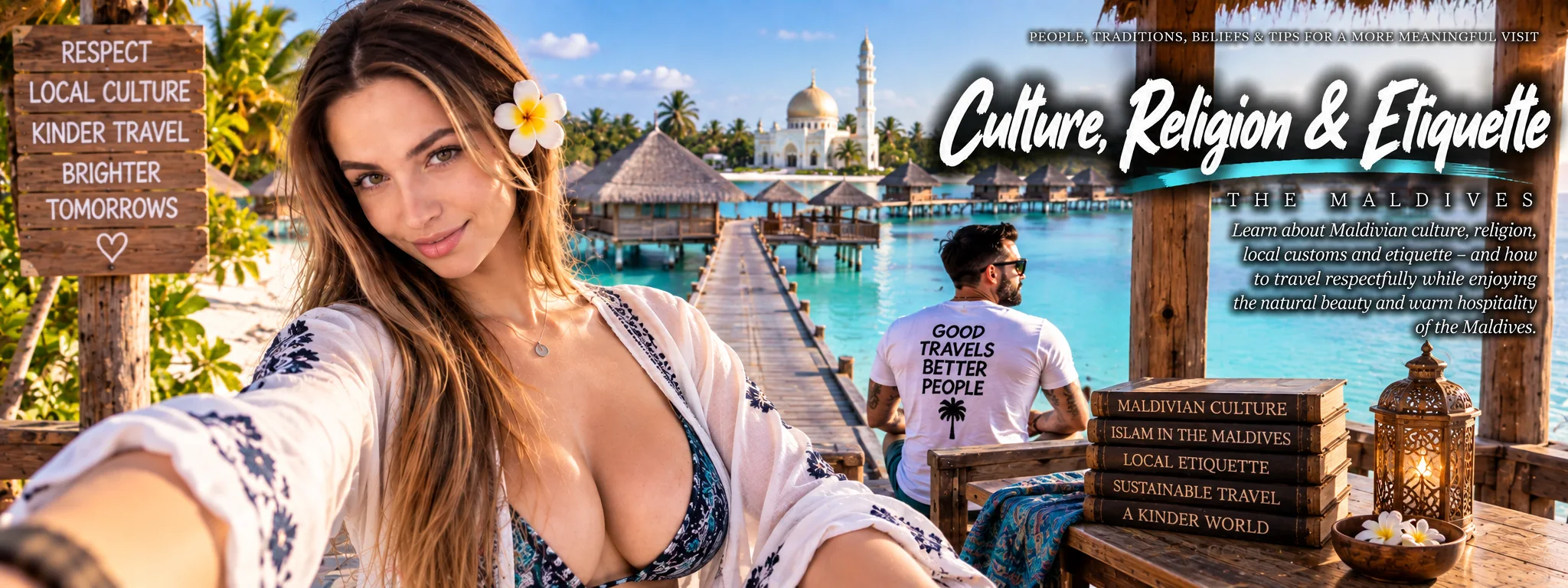
Islam is the state religion of the Maldives, and — unusually for a major tourism destination — the practical experience of that varies sharply depending on whether you're on a private resort island or an inhabited local one.
On a resort island
Resorts operate under a different set of norms than local islands: swimwear is standard, alcohol is served, and daily life doesn't visibly follow Islamic practice the way it does off-resort — resort islands have no permanent local population living under those norms day to day.
On a local (inhabited) island
Alcohol is not sold or served, and modest dress is expected outside a specific "bikini beach" set aside for tourists on most islands that host guesthouses — swimwear elsewhere on the island is considered inappropriate, the same as it would be in most conservative Muslim communities. The call to prayer happens five times daily, and shops or excursions may pause briefly around prayer times, especially on Fridays.
Practical etiquette that applies everywhere
- Cover shoulders and knees when walking through village areas on inhabited islands.
- Public displays of affection are best kept low-key, particularly off-resort.
- Photographing local people directly is best done with permission first, as in most communities.
LGBTQ+ travellers
Same-sex sexual activity is illegal under Maldivian law, which draws on Islamic Sharia alongside the civil Penal Code, and carries serious potential penalties including imprisonment. Enforcement against tourists is rare and travel advisories and LGBTQ+ travel guides consistently describe resort islands as welcoming in practice — many resorts host same-sex couples routinely and without incident. That said, this is a real legal risk rather than a purely theoretical one, and the same discretion recommended for public displays of affection generally applies with particular weight off-resort, in Malé, at the airport, and on local islands. There's no legal recognition of same-sex relationships and no anti-discrimination protections in the Maldives.
See our local island life guide for how this plays out day to day, and Dhivehi language basics for a few phrases that go a long way.